
 Available in US
I have only hit one correct score bet at a Rugby World Cup — New Zealand 34, Namibia 6 during a 2015 pool match. The odds were 28/1, and the feeling of precision was intoxicating. It was also, statistically, an outlier. Correct score is the hardest market in rugby betting because the sport’s scoring system creates hundreds of possible final scorelines, and predicting the exact one requires getting both the margin and the total right simultaneously. Rugby world cup correct score betting is not for the faint-hearted, but for bettors with strong models and small stakes, it offers the highest potential returns of any single-match market.
The appeal is the price. Correct score odds in rugby typically start at 8/1 for the most common outcomes and stretch beyond 100/1 for unlikely scorelines. Compare that with match result at 4/5 or handicap at 10/11, and the lure of a big payout from a modest stake is clear. The challenge is that the bookmaker’s margin on correct score is higher than on any other market, which means you need to be significantly more accurate than the market to generate positive expected value.
Why Rugby’s Scoring Structure Complicates Everything
RWC 2023 produced 325 tries in 48 matches — an average approaching 6.8 per game. Each try is worth five points, with a conversion adding two more. Penalties are worth three, drop goals three. This multi-denomination scoring system means the range of possible final scores is enormous. Football, by contrast, has a single scoring unit (one goal), which constrains the number of realistic outcomes and makes correct score modelling significantly easier.
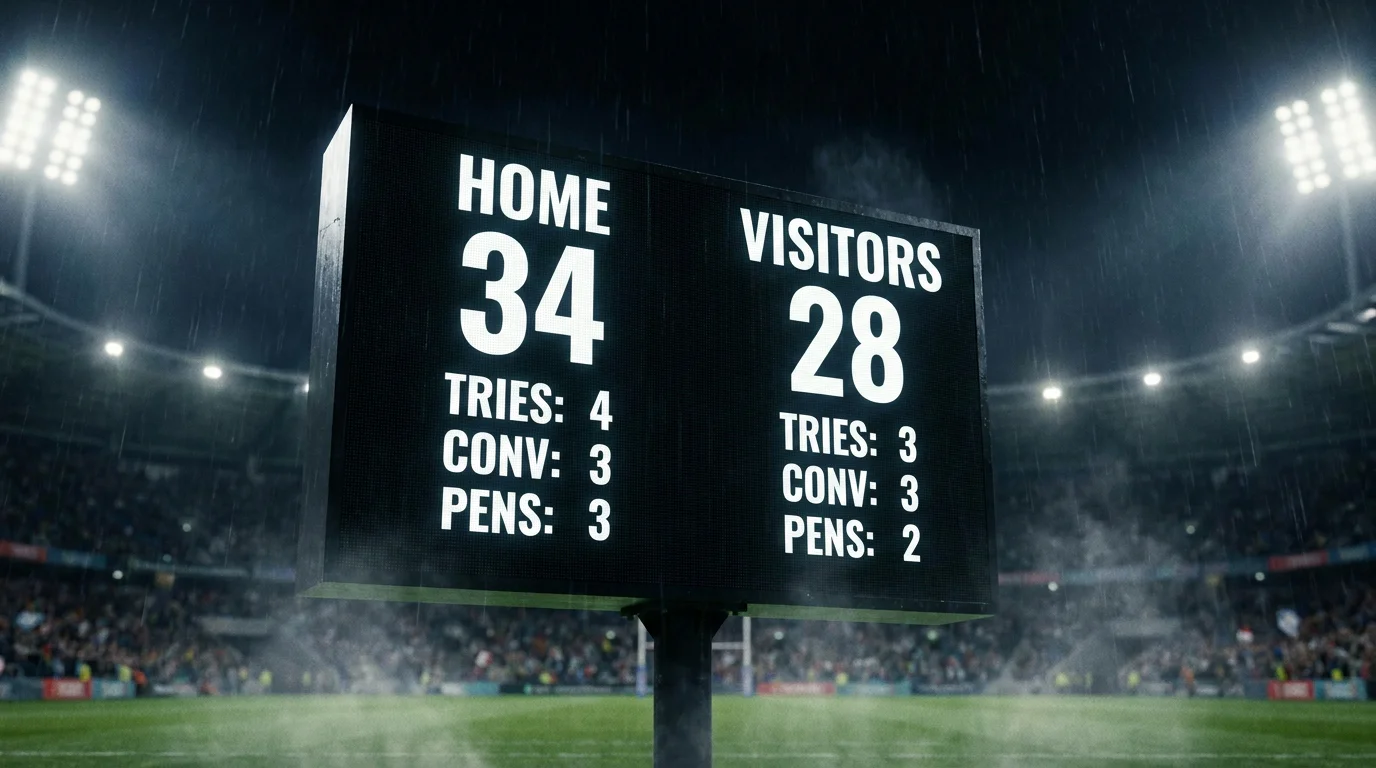
In rugby, certain scores are more probable than others based on the scoring denominations. A team’s total will most commonly be a multiple of seven (converted tries) plus multiples of three (penalties). So 21 (three converted tries) or 24 (three converted tries plus a penalty) are “natural” scores, while 22 or 23 are unlikely because they require odd combinations like an unconverted try plus specific penalty counts. Understanding which scores are “legal” — reachable through standard scoring combinations — and which are near-impossible narrows the field of realistic outcomes.
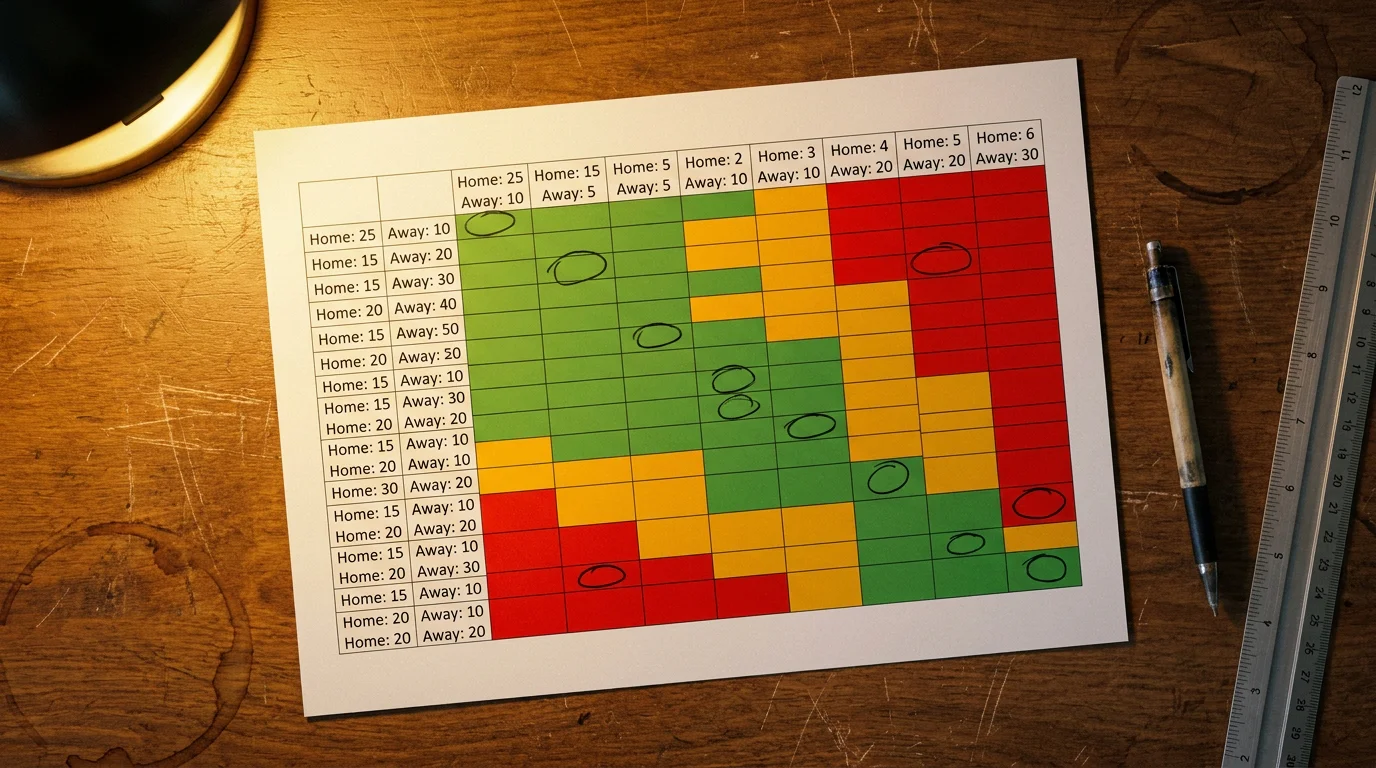
I maintain a spreadsheet of every possible scoreline from 0 to 60 for each team, colour-coded by probability: green for natural scores reachable through standard combinations, amber for scores requiring unusual events (missed conversions, drop goals), and red for scores that would require improbable scoring sequences. This visual map cuts the number of viable correct-score selections from hundreds to roughly 15-20 per match type, which is a manageable analytical workload.
Match outcome and margin betting accounts for around 60% of all rugby wagers globally, which means the correct score market sits firmly in the niche category. The smaller betting volume means the lines are set with less precision, because operators invest their sharpest pricing resources in the higher-volume markets. That imprecision is the opportunity for correct-score bettors with strong models.

Building a Prediction from the Ground Up
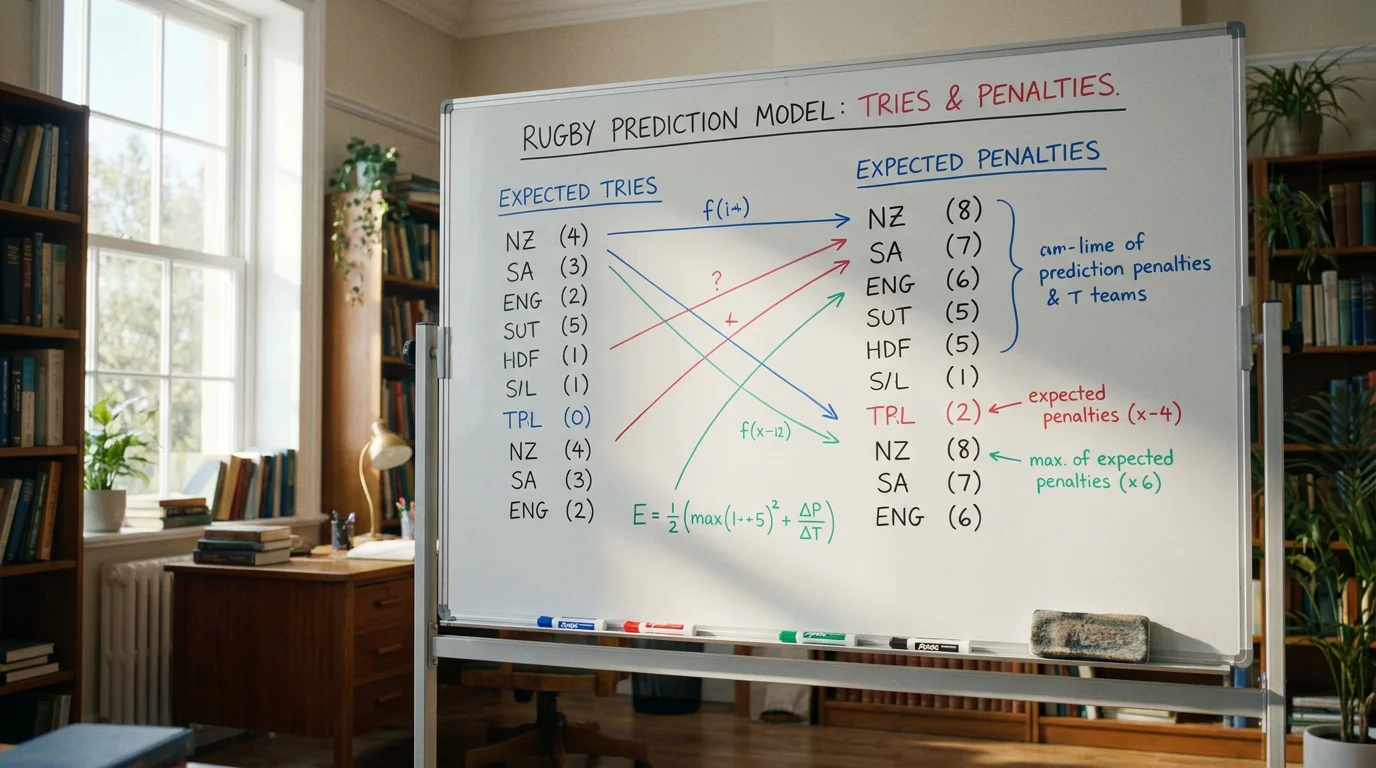
My correct score approach starts with two independent estimates: expected tries per team and expected penalty goals per team. For a pool-stage mismatch, the favourite might average 6-8 tries and the underdog 0-2. For a knockout match, both teams might average 1-3 tries each with 3-5 penalty goals. These estimates come from the same data I use for handicap and over/under analysis — ranking gap, recent scoring patterns, weather conditions, and defensive records.
From those estimates, I generate the three or four most likely scorelines. In a mismatch, the modal outcomes cluster around scores like 45-10, 52-7, or 38-14. In a tight knockout match, the cluster sits around 18-15, 21-12, or 15-9. I then check the bookmaker’s prices on those specific scorelines and compare the implied probability with my model’s probability. If my model gives 18-15 a 6% chance and the bookmaker prices it at 20/1 (implied 4.8%), the bet has positive expected value.
The margin of error is tight. A single missed conversion or an extra penalty in the closing minutes shifts the final score by two or three points, which is the difference between a winning correct score bet and a near-miss. That volatility means correct score should never represent a large portion of your tournament budget. I allocate no more than 5% of my total bankroll to correct score across the full RWC, treating each bet as a high-variance, low-frequency play. For a related but less precise approach to margin betting, the winning margin guide covers the band-based alternative.
 and Combination Bets as Alternatives
Some operators offer score range betting as a softer alternative to exact correct score. Instead of predicting 24-17, you predict a range like 20-29 for Team A and 10-19 for Team B. The odds are shorter, but the probability of landing is materially higher. I use score ranges in knockout matches where the total scoring is low and the range of realistic outcomes is narrow.
Combination bets — pairing a correct score prediction with a half-time score or a first scoring method — multiply the odds dramatically but also multiply the difficulty. A correct score plus correct half-time score double can pay 100/1 or more, but the probability of both legs landing is vanishingly small. I treat these as strictly recreational bets — a pound or two for the fun of it, never a serious analytical play.

What are the most common final scores in Rugby World Cup matches?
The most common final scores depend heavily on the match type. In pool-stage mismatches, scores like 40-7, 45-10, and 50-14 are frequent because the dominant team scores six or more converted tries while the weaker side manages one or two. In knockout matches, scores in the low 20s are most common — 21-17, 18-12, 24-15 — because the try-scoring rate drops and penalty goals become a larger share of the total. The 2023 final finished 12-11, illustrating the extreme defensive compression at the tournament’s climax.
Do bookmakers offer score range betting as an alternative to exact correct score?
Some UK-licensed operators offer score range or banded score markets alongside exact correct score. These markets allow you to predict that each team’s score will fall within a specified range rather than hitting an exact number. The odds are shorter than exact correct score but longer than match result or handicap, making score ranges a middle-ground option for bettors who have a strong view on the approximate outcome but lack the precision for an exact scoreline prediction.
