
 Available in US
Content
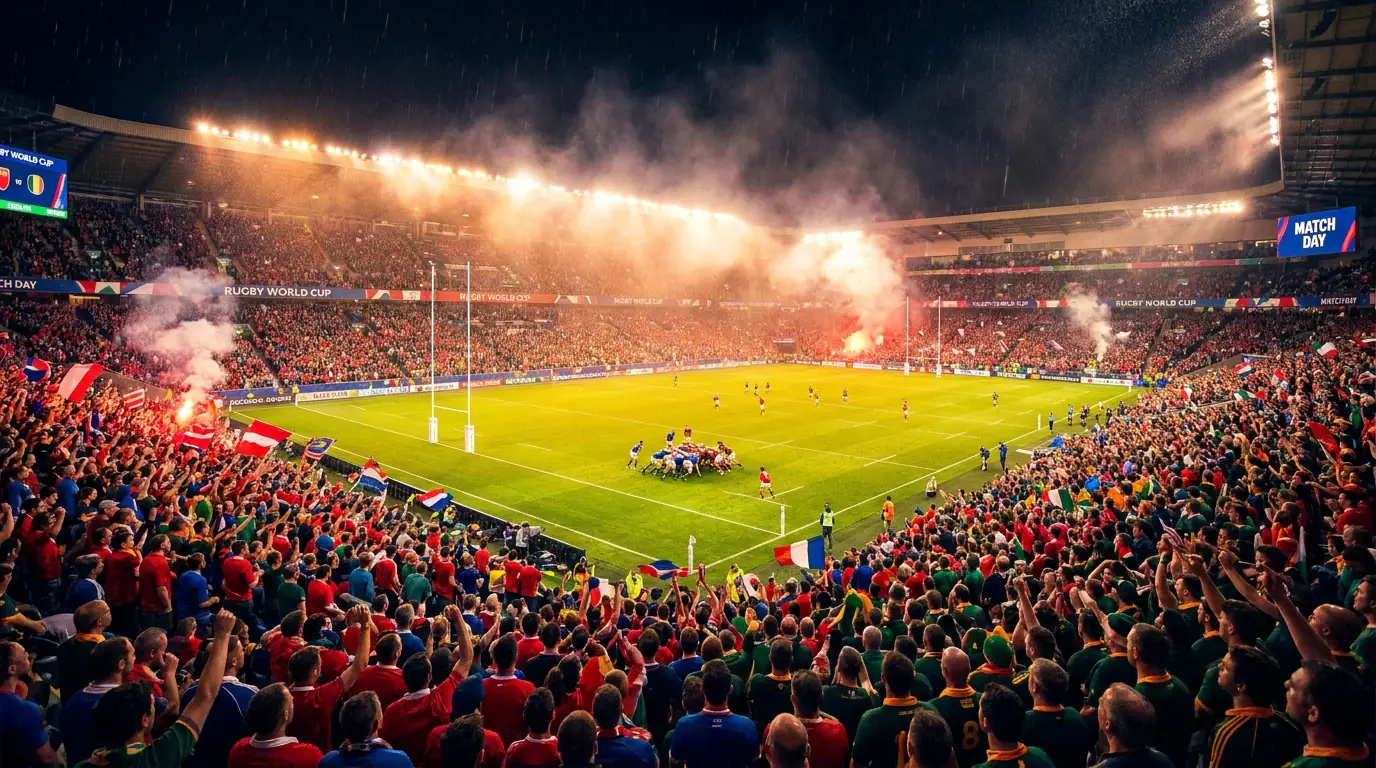
I spent seven weeks in France for RWC 2023. By the end of the tournament, my overall betting record was modestly profitable, but the lessons I took away were worth far more than the P&L. Every World Cup teaches you something about how markets behave under tournament conditions, and rugby world cup 2023 betting lessons are directly applicable to Australia 2027 in ways that no amount of theoretical analysis can replicate.
RWC 2023 was the biggest edition in the tournament’s history. The 48 matches generated 1.33 billion viewing hours globally — a 19% increase on Japan 2019 and 30% above England 2015. Those numbers represent not just eyeballs but betting engagement: more viewers means more bettors, deeper liquidity, and more efficient pricing. Understanding what the market got right and wrong in France is the best preparation for exploiting the market in Australia.
The Tournament That Broke Assumptions
France 2023 generated EUR1.8 billion in total expenditure and a net economic contribution of EUR871 million to the French economy. Tournament organisers described it as a record-breaker with unprecedented attendance, viewership, and engagement. The on-field product matched those superlatives — 325 tries, dramatic knockout matches, and a final decided by a single point.
But the results also broke several assumptions that bettors had carried into the tournament. France, the hosts and pre-tournament favourites in many books, were eliminated in the quarter-finals by South Africa. Ireland, the world’s number-one ranked team and Grand Slam champions, were beaten by New Zealand in their quarter-final. England, who had been written off after a poor Six Nations, reached the semi-finals. Fiji topped their pool for the first time and qualified for the quarter-finals.
Each of these results carried a betting lesson. France’s exit demonstrated that host advantage has limits — the crowd cannot cover for a defensive plan that gets dismantled by a superior pack. Ireland’s loss showed that regular-season form is not tournament form, and the market’s reliance on rankings and recent results overpriced Ireland’s chances. England’s run proved that a team with the right defensive structure and a match-day mentality can outperform their pre-tournament assessment. Fiji’s qualification confirmed that the dark-horse market has genuine value when the pool draw is favourable.

What the Upsets Revealed About Market Pricing
The quarter-final round was the most profitable for bettors who had identified the market’s blind spots. Ireland were priced as heavy favourites against New Zealand, with the match-result market implying a 60-65% probability for an Irish win. My own assessment was closer to 50-50, because New Zealand’s World Cup pedigree — they have never lost a quarter-final — was a variable the market underweighted relative to Ireland’s ranking.
The South Africa vs France quarter-final was similar. France were shorter-priced than South Africa despite the Springboks’ tournament-winning pedigree and a forward pack that had dominated every opponent in the pools. The home crowd was priced as a bigger advantage than it deserved, and sharp money that recognised this mispricing found value on South Africa at odds that, in hindsight, were generous for a two-time defending champion.

Fiji’s pool-stage run offered a different kind of lesson. They beat Australia in a match where the handicap line had Fiji as significant underdogs, and they topped their pool to qualify for the knockout stage. The value was in the each-way outright market before the tournament started: Fiji at 66/1 or longer, with each-way terms for a top-four finish, was a bet that paid handsomely even though they lost in the quarter-finals.

Patterns That Will Repeat in Australia
Certain patterns from France 2023 are structural — they arise from the nature of tournament rugby rather than from the specific circumstances of a single edition.
Defence wins tournaments. South Africa conceded the fewest tries per match of any team in the tournament and won the final 12-11 with a scoring profile dominated by penalty goals. The team that controls the breakdown, wins the aerial contest, and converts penalty opportunities consistently is the team that survives knockout rounds. The over/under market in knockout matches should always skew toward the under based on this structural pattern.

Host advantage fades in the knockout rounds. France were dominant in the pool stage, playing with energy and crowd support. In the quarter-final, against a team with genuine World Cup pedigree, the crowd became a source of pressure rather than support. Australia 2027 will produce the same dynamic: the Wallabies will thrive in the pools and face a harder test when the stakes rise.
Rankings do not predict knockout outcomes. The top-ranked team has failed to win the World Cup in four of the last five editions. Backing the highest-ranked side in each knockout match would have produced a losing record across the past three tournaments. The market will again overweight rankings at Australia 2027, and the value will again sit on the side of the road that considers pedigree
 , matchup dynamics, and tournament readiness alongside the numbers.
One additional pattern worth tracking: the trajectory of try-scoring rates across tournament phases. At RWC 2023, the pool stage averaged well above six tries per match, but that rate dropped sharply in the knockout rounds. Bettors who adjusted their over/under models between phases outperformed those who applied a single tournament-average scoring rate. At RWC 2027, with four additional teams creating more mismatches in the pools, the divergence between pool and knockout scoring will be even wider. For how these lessons feed into the broader tournament setup, the 2027 betting briefing applies these frameworks to the Australian context.
[id=”1″ title=”Which results at RWC 2023 most surprised the betting markets?” desc=”Three results stand out. Ireland’s quarter-final loss to New Zealand, where Ireland were 60-65% favourites, was the biggest shock in outright market terms. France’s quarter-final exit at home to South Africa defied the host-advantage narrative. And Fiji topping their pool — beating Australia along the way — surprised a market that had priced them as third or fourth in the group. Each result reflected a structural mispricing: overreliance on rankings, overvaluation of home advantage, and undervaluation of dark-horse capability.”]
[id=”2″ title=”What lessons from France 2023 are most applicable to Australia 2027?” desc=”Three core lessons transfer directly. First, defence wins knockout rugby — back the under-totals and teams with strong defensive records in the elimination rounds. Second, host advantage is real in the pool stage but unreliable in knockout matches. Third, rankings overstate the predictability of quarter-finals and semi-finals; World Cup pedigree and matchup dynamics matter more than the current form table. These patterns are structural and will repeat in 2027.”]
[/faq]
