
 Available in US
Content

Pool-stage betting is about volume and predictability. Knockout-stage betting is about nerve and precision. Everything changes once the groups are settled and the bracket is drawn. I learned this the hard way at RWC 2019, when I carried a profitable pool-stage strategy into the quarter-finals without adjusting my approach and gave back a third of my tournament gains in two days. Rugby world cup knockout stage betting demands a complete reset of your analytical framework, your market selection, and your emotional discipline.
The knockout stage at RWC 2027 begins with a format innovation: a Round of 16. This is the first World Cup to include this round, adding eight elimination matches before the quarter-finals. Combined with the quarter-finals, semi-finals, bronze final, and the main final, the knockout phase features up to 16 matches played across the final three weeks of the tournament. The RWC 2023 final alone attracted 94 million viewing hours — a single-match record that demonstrates the intensity of audience and betting engagement at this stage.
Why Knockout Matches Behave Differently
RWC 2023 produced 325 tries in 48 matches, but the try-scoring rate dropped sharply from pool to knockout play. Semi-finals and finals at recent World Cups have averaged fewer than four tries per match combined, compared to seven or more in pool-stage mismatches. The reason is straightforward: elimination matches incentivise defensive caution. Teams cannot afford to take risks that might lead to a turnover try, so they kick for territory, contest the breakdown aggressively, and rely on their goal-kicker to accumulate points through penalties.
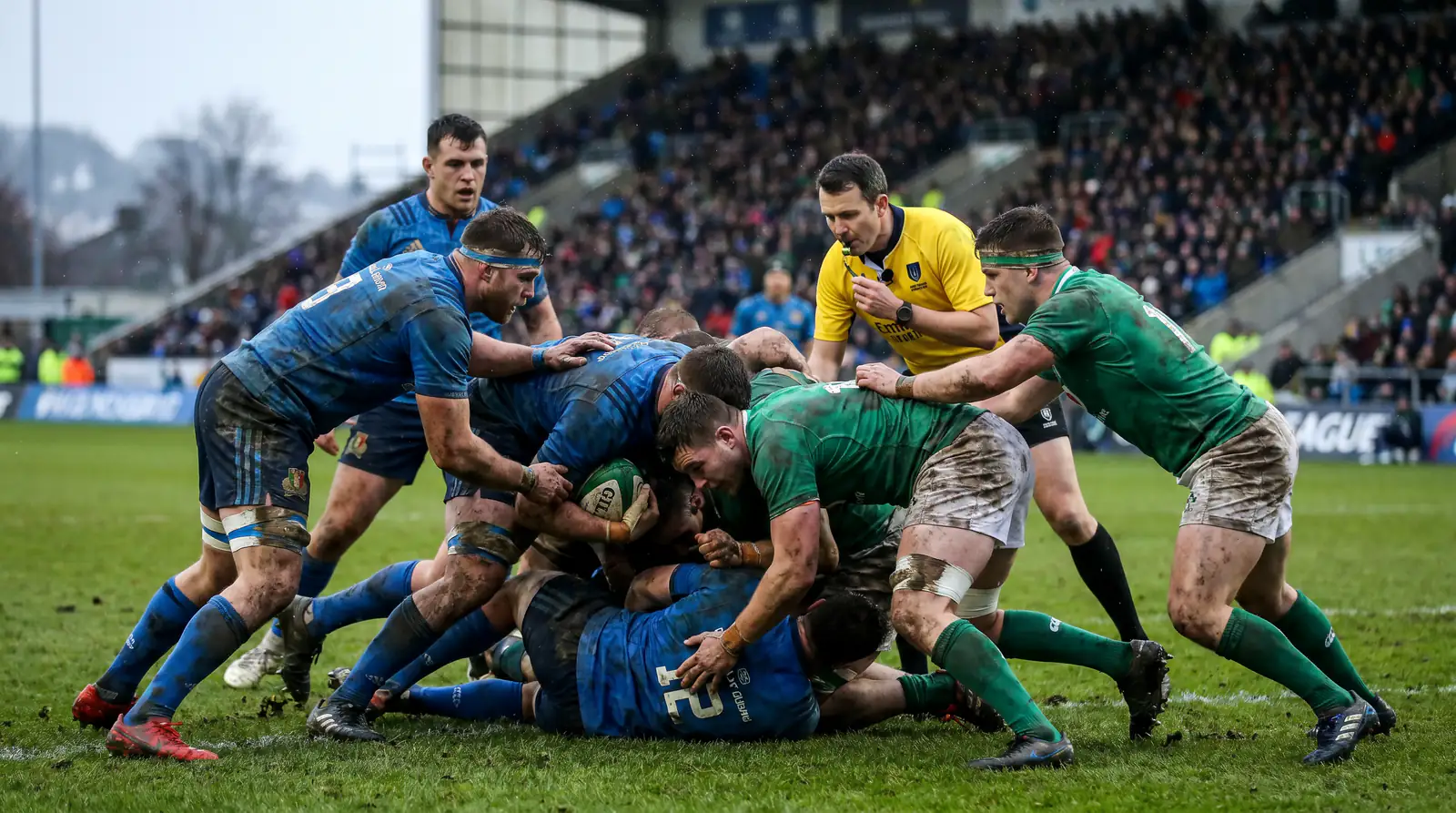
This defensive compression affects every betting market. Handicap lines tighten from the 20s and 30s in pool play to single digits in the knockout rounds. Over/under totals drop from the 50s to the low 40s or even high 30s. First try scorer odds lengthen because the opening try takes longer to arrive and is more likely to come from a set-piece or a penalty advantage than from open play.
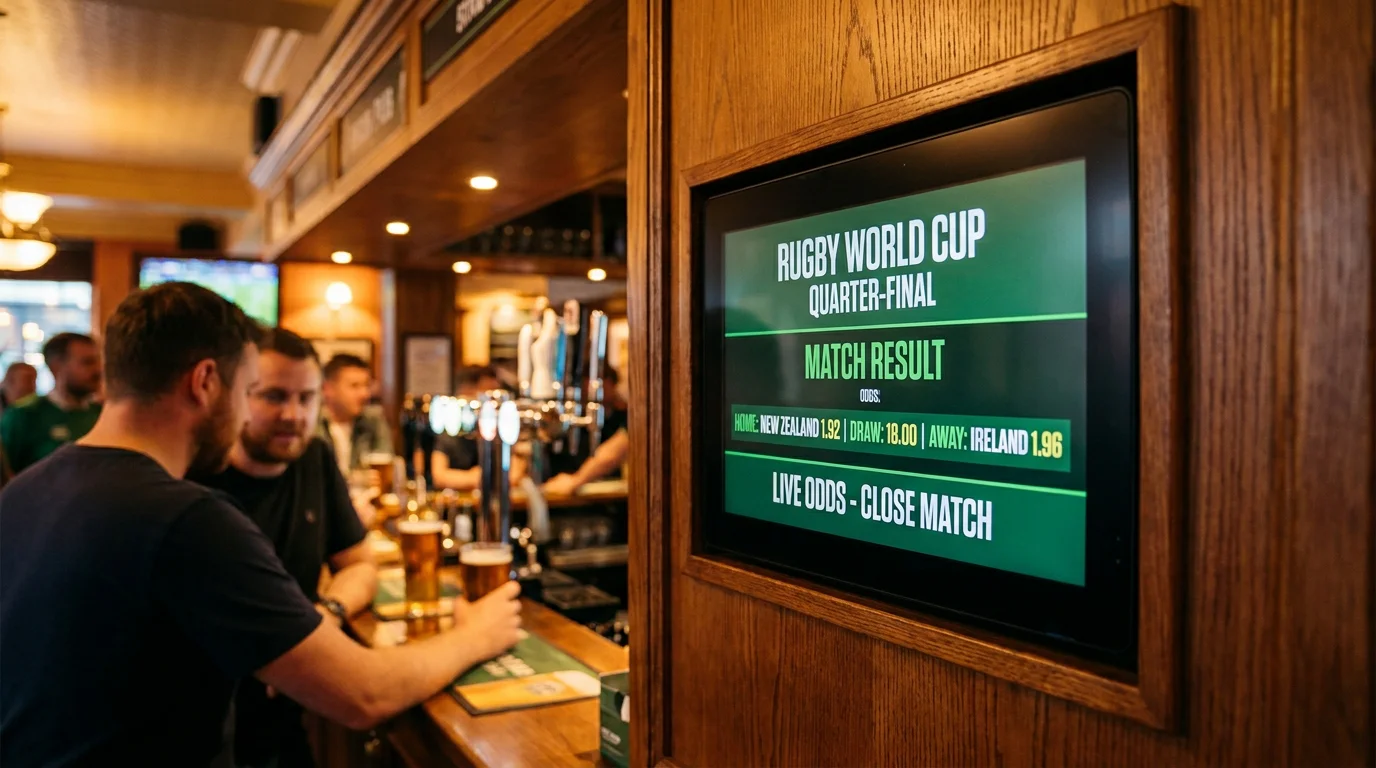
The key market shift is from handicap to match result. In pool play, the match result on heavy favourites pays almost nothing, so the handicap is where the action sits. In the knockout rounds, the match result becomes competitive — quarter-finals regularly feature odds of 4/5 versus evens, where the margin between the two sides is genuinely tight. Backing the underdog on the match-result line or the draw-no-bet market becomes viable in a way it is not during the group phase.
Market Adjustments as the Bracket Narrows
The outright market reprices dramatically after the pool stage. A team that cruises through their group sees their odds shorten; a team that struggles or squeaks through as a best third-place qualifier sees their odds drift. These adjustments create windows of value for bettors who spotted the signal during the pools.

I pay particular attention to the semi-final odds immediately after the quarter-final draw is confirmed. The market adjusts quickly to the bracket, but the initial reprice sometimes fails to account for stylistic matchups. A team that looked vulnerable in the pools against a specific type of opponent may face a completely different challenge in the quarters, and the market anchors too heavily on recent form rather than the head-to-head dynamic. Under-market selections and live positions in the first ten minutes of a quarter-final are my preferred plays at this stage.
Another knockout-specific angle: the under-totals market becomes progressively more reliable as the tournament deepens. In the semi-finals and final, where the stakes are highest and the margins thinnest, total points regularly finish below 40. Selling the total or taking the under at 42.5 has been a consistent performer across the past three World Cups, because the intensity of knockout rugby compresses scoring in ways that regular-season matches do not replicate.
The Round of 16 — Uncharted Territory
The Round of 16 at RWC 2027 has no precedent in Rugby World Cup history. Sixteen teams advance from the pool stage — the top two from each of six pools plus the four best third-place teams. The Round of 16 bracket will feature some lopsided fixtures (a pool winner against a third-place qualifier) and some tightly contested ones (a pool winner against a strong second-place team from a different group).

For bettors, the absence of historical data is both a risk and an opportunity. Bookmakers will set Round of 16 lines using modelling and analogies to football’s World Cup rather than rugby-specific precedent. Those modelled lines will inevitably contain errors — and the bettors who have spent the pool stage building detailed team profiles will be best positioned to spot them. My plan is to treat the Round of 16 as a transitional phase: handicap lines somewhere between pool-stage width and quarter-final tightness, with try-scoring rates that reflect the heightened stakes but not yet the extreme conservatism of a semi-final.
One tactical note: the Round of 16 matches will likely be scheduled across two days, giving bettors the opportunity to observe the first four fixtures before the second four kick off. Information from the early matches — the level of defensive intensity, the refereeing approach, the impact of the new format on player behaviour — will be valuable for adjusting positions on the later fixtures. This is one of the rare situations where patience on day one of a knockout round is more profitable than jumping in on every match. For how the final itself creates a unique set of markets, the final betting guide explores the showpiece match in detail.

What happens if a Rugby World Cup knockout match ends in a draw?
If a knockout match at the Rugby World Cup is level after 80 minutes, the teams play two periods of extra time (10 minutes each). If the scores remain tied after extra time, a sudden-death kicking competition determines the winner. For betting purposes, most operators settle match-result bets on the outcome after extra time and penalties, though some markets — particularly handicap and total points — may settle on the 80-minute result only. Always check settlement rules before placing a knockout bet.
Do bookmakers offer different markets for the Round of 16 compared to quarter-finals?
The core market range — match result, handicap, over/under, try scorers — will be the same for both the Round of 16 and the quarter-finals. However, the depth of specials and prop markets may be thinner for the Round of 16 because bookmakers have less data to price these fixtures accurately. As the tournament progresses to the semi-finals and final, market depth typically increases because public interest and betting volume peak at the climactic end of the tournament.
