
 Available in US
Content

I have watched friends lose control during a major tournament. Not the casual “I had a bad weekend” kind — the kind where the daily betting sessions stretch longer, the stakes creep upward, and the language shifts from analytical detachment to desperate justification. A six-week tournament like the Rugby World Cup is uniquely dangerous for anyone whose relationship with gambling sits on the edge of healthy, because the constant match schedule creates a relentless cycle of opportunities that never pauses long enough for reflection.
Responsible gambling rugby world cup is not a box-ticking exercise I include because the industry expects it. It is the single most important article on this site. The Gambling Survey for Great Britain found that 2.7% of adults in the UK — approximately 1.4 million people — score 8 or higher on the Problem Gambling Severity Index, placing them in the problem gambling category. Another 3.1% are at moderate risk and 8.8% at low risk. Young adults aged 18-24 are the most vulnerable group, with problem gambling rates approaching 10%. These are not abstract statistics; they describe real people, many of whom will be tempted by the excitement and availability of RWC 2027 betting.
Recognising When Engagement Becomes Harmful
Roughly 47% of UK adults participate in some form of gambling in any given four-week period. Most do so without harm — a weekend accumulator, a lottery ticket, a small outright bet on England to win the World Cup. The line between recreational and problematic gambling is not always obvious, and a high-profile tournament can blur it further.

The warning signs are specific and recognisable. Chasing losses — placing larger bets after a losing day to “win back” what was lost — is the most common early indicator. Increasing stakes beyond your pre-set budget because the next match “feels like a certainty” is another. Betting on matches you have not analysed simply because the market is open and the kick-off is minutes away. Lying to people close to you about how much time or money you are spending on betting. Feeling irritable or anxious when you cannot place a bet on a match you are watching.
The PGSI (Problem Gambling Severity Index) is a nine-question self-assessment tool that the Gambling Commission uses in its national survey. It asks questions like whether you have bet more than you could afford to lose, whether you have felt guilty about gambling, and whether gambling has caused health problems including stress or anxiety. You can find the questionnaire online and complete it in under five minutes. I recommend doing so before RWC 2027 begins and again at the midpoint of the tournament — the second assessment matters more, because the cumulative effect of daily betting is what shifts people from low-risk to moderate-risk categories.

Tools and Resources That Actually Work
UK-licensed operators are required to offer a suite of self-management tools. These are not afterthoughts buried in a settings menu — they are structural protections designed by the UK Gambling Commission as mandatory licence conditions. Using them is not a sign of weakness; it is the same discipline that any serious bettor applies to bankroll management.
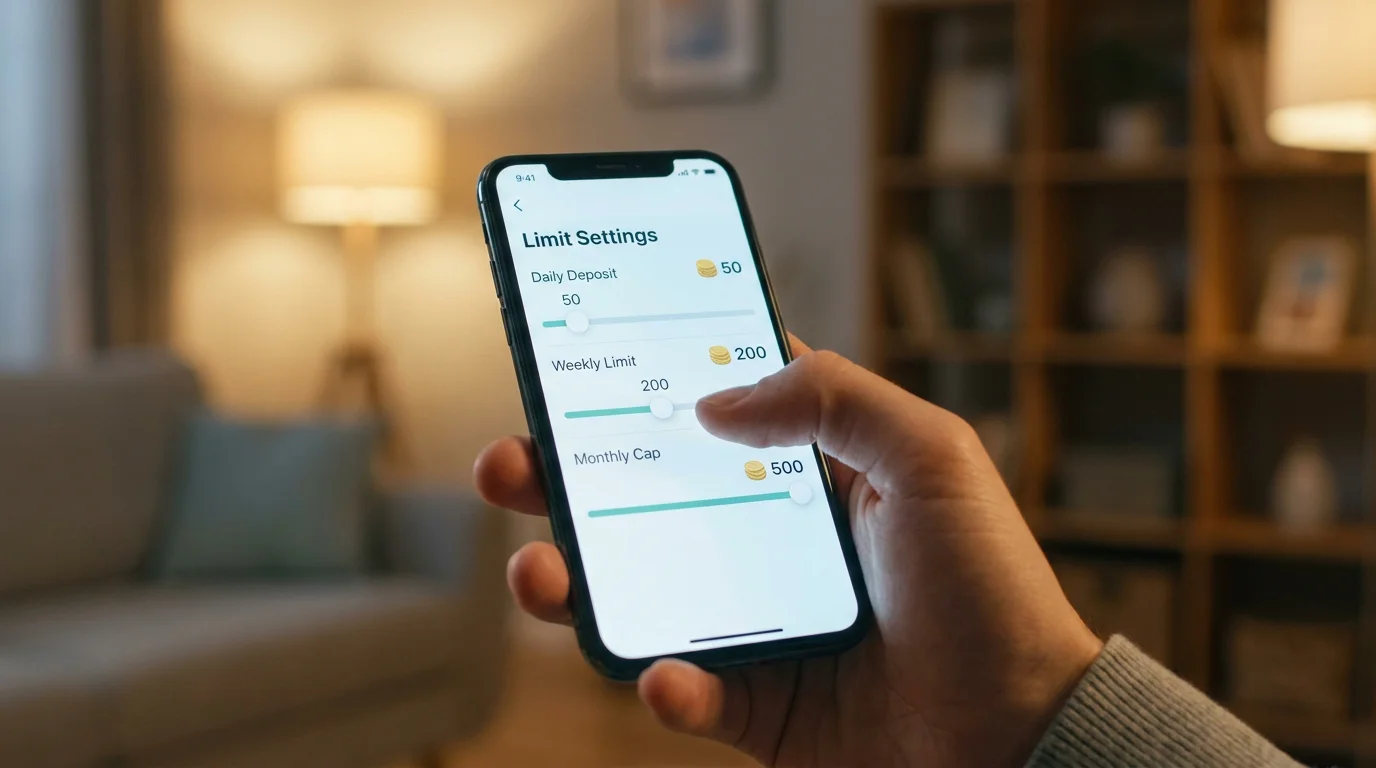
Deposit limits cap the amount you can add to your betting account within a chosen timeframe — daily, weekly, or monthly. Setting a weekly deposit limit before RWC 2027 starts is the single most effective tool for controlling tournament spending. Once the limit is reached, you cannot deposit more until the next period begins. Lowering a deposit limit takes effect immediately; raising it requires a cooling-off period (typically 24-72 hours), which prevents impulsive increases during a losing streak.
Loss limits work similarly but cap the net amount you can lose rather than the gross deposits. Session time limits trigger a notification after a set period of continuous betting — 30 minutes, 60 minutes, or whatever you choose. Reality checks are pop-up reminders that display your session duration, net position, and total stakes. These interruptions sound annoying, but they serve a genuine cognitive function: they break the absorption loop that keeps people betting without awareness of how long or how much.
GamStop is the UK’s free national self-exclusion scheme. Registering with GamStop blocks your access to all UKGC-licensed online gambling sites for a chosen period — six months, one year, or five years. It is a serious step, but for anyone who recognises that their gambling has become unmanageable, it is the most effective intervention available. The National Gambling Helpline (0808 8020 133) and GamCare (gamcare.org.uk) offer confidential advice and support for anyone concerned about their own or someone else’s gambling.

A Tournament-Specific Plan for Six Weeks
The Rugby World Cup runs for approximately six weeks. That duration is the danger — not any single match. A bad day is absorbable. A bad week is recoverable. But a sustained pattern of escalating stakes across 30+ match days is where the damage accumulates invisibly until it is too late.

Before the tournament starts, set a total budget for the entire six weeks. This is money you can afford to lose entirely without affecting your bills, savings, or lifestyle. Divide that budget into six weekly envelopes. In weeks with more matches (the pool stage), keep your per-bet stakes small to spread your allocation across more fixtures. In weeks with fewer matches (the knockout stage), you can afford slightly larger stakes per bet, but the weekly ceiling remains fixed.
Avoid in-play betting after a loss. The impulse to recover in the live market during the same match you just lost a pre-match bet on is powerful and almost always destructive. Set a hard rule: if a pre-match bet loses, no in-play activity on that fixture. Walk away, watch the rest of the match as a fan, and review your positions the following day with a clear head.
Take at least one full day off from betting each week. A day where you do not log in, do not check odds, and do not think about the next fixture. The tournament will still be there when you return. Your bankroll and your wellbeing are better served by a structured break than by grinding through every available market.

What is GamStop and how do I register?
GamStop is a free self-exclusion scheme that covers all UKGC-licensed online gambling operators. When you register at gamstop.co.uk, you choose a self-exclusion period of six months, one year, or five years. During that period, you will be blocked from accessing all participating gambling websites and apps. Registration takes a few minutes and requires your name, date of birth, email address, and postcode. The exclusion cannot be reversed during the chosen period.
Can I set a deposit limit specifically for the Rugby World Cup period?
Most UK-licensed operators allow you to set weekly or monthly deposit limits that you can adjust at any time. You can set a lower limit to coincide with the RWC 2027 period and raise it again after the tournament ends, though increases typically require a 24-72 hour cooling-off period. Some operators also offer session-specific deposit limits, which cap your spend within a single login session. Check your chosen operator’s responsible gambling tools section for the specific options available.
Where can I get help if I feel my RWC betting is becoming a problem?
The National Gambling Helpline, operated by GamCare, is available on 0808 8020 133 and offers free, confidential advice 24 hours a day, seven days a week. GamCare also provides live chat and counselling at gamcare.org.uk. The charity GamAnon supports friends and family of people affected by gambling. For immediate self-exclusion from all UK-licensed gambling sites, register at gamstop.co.uk.
